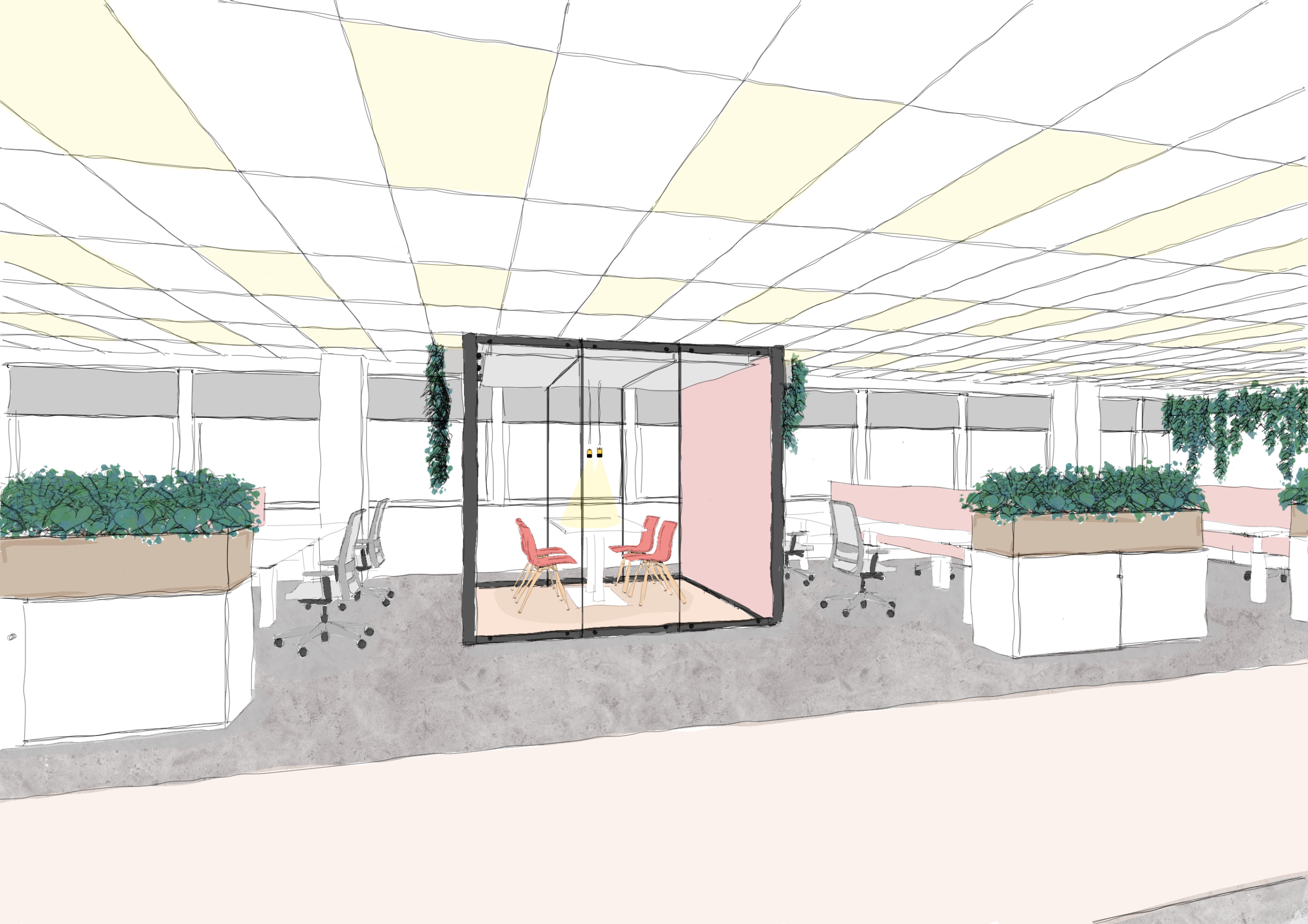
Furniture: the foundation of every workplace
A good office design starts with the right furniture. It forms the physical foundation of the workplace and has a direct impact on comfort, productivity, and appearance.
Desks, office chairs and storage furniture
An ergonomic desk and an adjustable office chair are essential for a healthy working posture. Practical storage units, such as drawer units and filing cabinets, are also essential to keep the workspace organized and tidy.
Meeting tables, seating areas and reception desks
Besides workspaces, common areas are also important. Conference tables determine the dynamics of meetings, while seating in waiting rooms or lounge areas provides comfort and hospitality. The reception desk is often the first thing visitors see, so it must be both functional and presentable.
Layout and use of space
An office’s layout largely determines how pleasant and efficient work can be. The right balance between openness and focus zones is crucial.
Open vs. closed workplaces
Open-plan workspaces encourage collaboration and communication, but can also be distracting. Closed workspaces or small meeting rooms offer more privacy and focus. A smart office design often combines both.
Quiet zones, meeting places and routing
In modern offices, dedicated quiet workspaces are essential. Informal meeting areas and phone booths also contribute to a flexible work style. The flow of work—how people move through the office—should be logical and create a sense of calm.
Lighting and acoustics
Light and sound may be less tangible components of office design, but they have a huge impact on how people feel and perform in their workplace.
Daylight, artificial light and mood lighting
Sufficient daylight contributes to energy and concentration. Where this is lacking, a good lighting plan with artificial lighting provides balance. Think of bright work lighting combined with warmer mood lighting in relaxation areas.
Acoustic panels, floor coverings and ceiling solutions
Poor acoustics lead to difficulty concentrating and stress. Acoustic wall panels, sound-absorbing ceilings, or carpet tiles can significantly improve this. Especially in open-plan offices, acoustics are a decisive factor in working comfort.
Technology and cable management
ICT facilities: screens, docking stations, meeting tools
In a modern office, technology plays a central role. Not only for performing daily tasks, but also for collaboration and communication.
Employees often work with multiple screens, laptops, and mobile devices. Docking stations, wireless chargers, and video calling tools make work more efficient and flexible. Presentation screens, speakerphones, and videoconferencing systems are now essential in meeting rooms. A well-designed space takes this into account, ensuring everything works seamlessly.
Cable ducts, wall sockets and wireless solutions
Visible cables not only create a cluttered impression, but also pose a tripping hazard and cause unrest. Cable ducts, smart wall outlets, and integrated connection points in furniture help keep workspaces tidy and safe. Where possible, wireless solutions offer additional freedom and flexibility.
Ergonomics and health
Adjustable desks and chairs
A healthy posture is essential for preventing physical complaints and fatigue. Therefore, ergonomics plays a key role in office design.
A good desk is height-adjustable, allowing employees to work both sitting and standing. An ergonomic office chair supports the back, neck, and arms and is fully adjustable to the user’s body. This promotes comfort and reduces the risk of work-related injuries.
Standing workstations, balance chairs and ergonomic accessories
Variety is key. Standing workstations encourage movement throughout the workday, while balance chairs and wobble stools improve posture and keep muscles active. Also consider ergonomic mice, keyboards, and monitor arms—small accessories with a big impact on health and job satisfaction.
Use of color, style and decoration
Color psychology and brand identity
An office’s appearance influences how people feel and how they perceive the company. Colors, materials, and decor are key factors.
Colors have a psychological effect. Blue exudes calm and confidence, while yellow stimulates creativity and energy. By aligning the use of color with the corporate identity and the desired atmosphere in each space, a consistent and recognizable look and feel is created that aligns with the brand identity.
Plants, art, visuals and branding
Plants bring life to a space and improve the indoor climate. Art and visuals add personality and can inspire employees. Think of company slogans on the wall, project photos, or logos incorporated into the interior. This makes the work environment not only functional but also motivating and visually appealing.
Additional amenities and details
Climate control, ventilation, scent experience
A pleasant temperature and fresh air are essential for concentration and well-being. Smart thermostats and air filtration systems contribute to this. A scent experience—for example, through subtle fragrance diffusers—can also contribute to calmness, focus, or energy, depending on the function of the space.
Pantries, lockers, wardrobes and signage
Functional amenities simplify daily office use. A well-equipped pantry promotes social interaction and provides employees with a place to relax. Lockers and coat racks ensure tidy workspaces. Wayfinding helps visitors and employees navigate the building easily.
Why all these parts are important
Coherence between comfort, productivity and appearance
Office design is more than just furniture and walls—it’s an interplay of comfort, ease of use, appearance, and strategy.
When all elements of the office design are well-coordinated, the result is an environment that supports people in their work. This contributes to better performance, reduced absenteeism, and increased job satisfaction. Moreover, it projects a sense of professionalism and reliability to clients and visitors.
Impact on employee satisfaction and customer experience
An inspiring, healthy, and well-designed work environment makes employees feel valued. This increases engagement and motivation. At the same time, the office’s appearance contributes to a positive customer experience—it’s a physical calling card for your organization.