The meaning of office design
What do we mean by office furnishings?
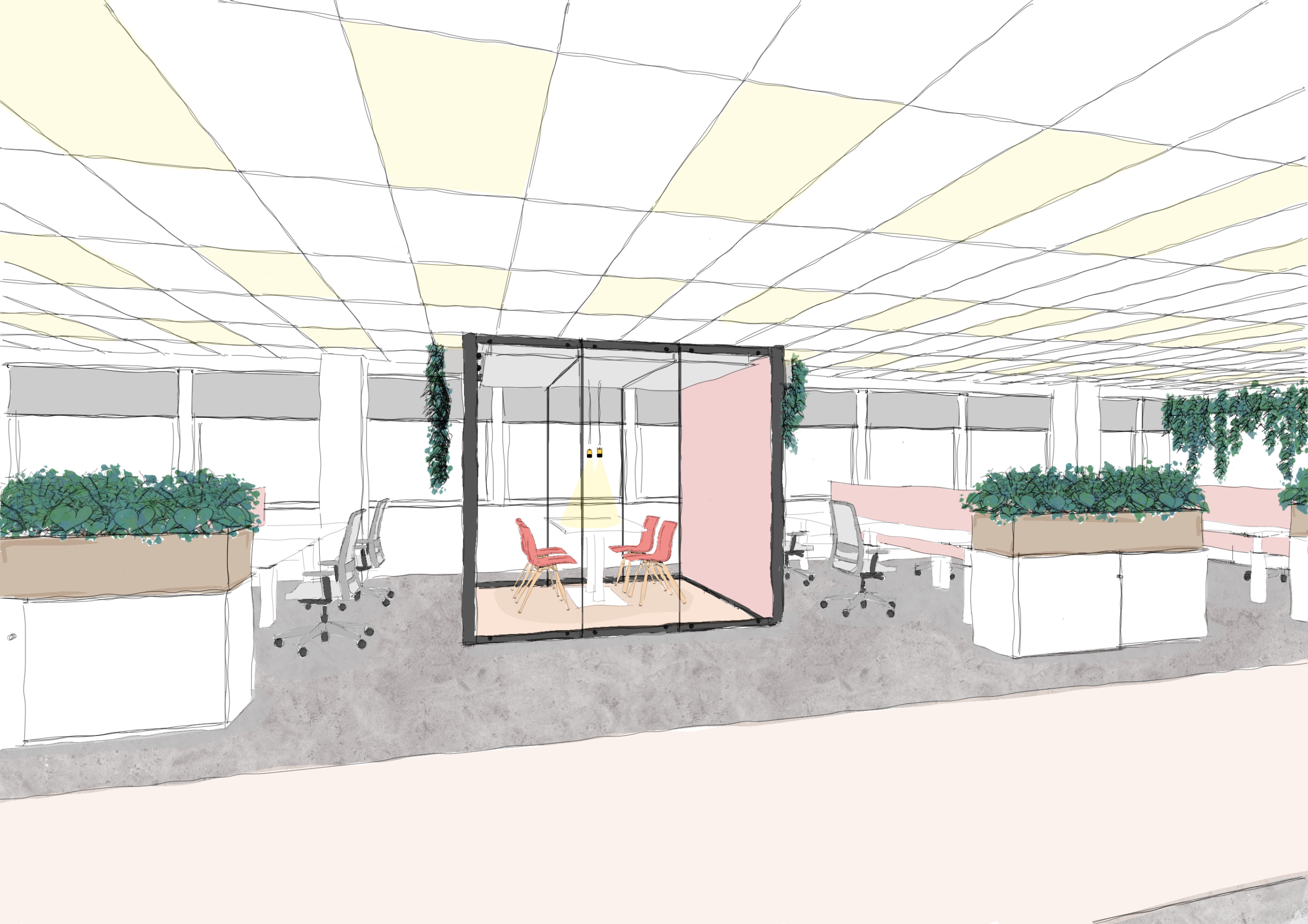
Office design refers to the overall concept of how an office space is designed, both practically and aesthetically. It encompasses not only furniture and decor but also how a space is arranged to support the work process. Consider desks, chairs, lighting, colors, acoustics, storage options, and the overall ambiance. A good office design aligns with the needs of employees and the company’s identity. The goal is to create an environment that is both functional and pleasant to work in.
Difference between design and layout
The terms “furnishing” and “layout” are often used interchangeably, but they don’t mean the same thing. Layout refers to the physical placement of elements within a space: where are the workstations located, how many meeting rooms are there, and whether there’s a separate lunch area. This primarily concerns the structure and layout of the space.
Furnishing , on the other hand, is broader. Besides the layout, it also encompasses the choice of materials, colors, furniture, lighting, and accessories. It’s the overall atmosphere and usability of the space. You could say: the layout is the skeleton of the office, while the furnishings provide the character and functionality . Both are essential for a well-functioning office, but they require a different approach and expertise.
Why is office design important?
Influence on productivity and job satisfaction
A well-designed office space directly contributes to employee productivity and job satisfaction. When a work environment is logically laid out, feels comfortable, and is aligned with daily tasks, employees experience less stress and greater focus. Think of ample daylight, soothing colors, comfortable workspaces, and sufficient space for meetings and concentration. When people feel comfortable in their workplace, they are more motivated and deliver better work. Office design is therefore not an afterthought, but a powerful tool for getting the best out of your team.
Health and ergonomics
Besides atmosphere and motivation, employees’ physical health also plays a significant role. Ergonomic furniture, such as adjustable desks and well-adjustable office chairs, helps prevent back, neck, and shoulder pain. Proper lighting, adequate ventilation, and acoustic solutions also contribute to a healthy workplace. An office design tailored to the ergonomic needs of users not only prevents absenteeism but also increases the comfort and efficiency of daily work.
Imagery towards customers and visitors
An office’s interior design is often the first thing clients and visitors notice. It speaks volumes about your brand, your way of working, and your attention to detail. A cluttered, outdated, or impersonal space can leave a negative impression, while a stylish and professionally designed environment exudes trust and engagement. Whether you want a formal look or to express your creativity, the interior design should align with your brand identity and target audience. This makes your office an extension of your corporate image.
Components of a good office design
Furniture and workplace furnishings
Furniture forms the foundation of any office design. Think of desks, ergonomic chairs, storage cabinets, conference tables, and flexible workspaces. When choosing furniture, it’s important to consider not only its appearance but also its comfort and functionality. A well-designed workspace supports the type of work performed there and prevents physical complaints. Moreover, attractive and high-quality furniture contributes to the professional image of your company.
Layout of the room
A well-thought-out layout is essential for a pleasant and efficient work environment. This means not only sufficient space for workstations, but also areas for meetings, relaxation, and focused work. Open-plan offices promote collaboration, while quiet zones or closed-off spaces provide focus and privacy. Routing—the way people move through the office—also influences tranquility, clarity, and productivity.
Lighting and acoustics
Good lighting is essential in a workspace. Daylight is ideal, but if it’s limited, a lighting plan with the right artificial lighting will provide sufficient brightness without causing eye strain. Acoustics are often underestimated, but they have a significant impact on concentration and comfort. Sound-absorbing materials, acoustic panels, or carpet can reduce disruptive reverberation and background noise. Together, light and sound create a pleasant atmosphere and improve performance.
Technology and cabling
A modern office relies on technology. Computers, screens, printers, networks, and video conferencing systems must not only function properly but also be neatly integrated into the space. Smart cable management prevents cord clutter and contributes to a safe, tidy, and professional appearance. Consider charging stations, wireless solutions, and smart lighting or climate control.
Use of color and decoration
Colors have a proven effect on mood and productivity. Warm tones can energize, while cool colors promote calm and focus. The use of color in an office should align with the space’s purpose and the company’s corporate identity. Decorative elements such as plants, art, logos, or inspiring quotes give the space personality and reinforce the brand experience. This way, the office becomes not only functional but also a place where people feel at home.
Different styles and applications
Modern, industrial and minimalist office styles
Every organization has its own style and character, and that’s reflected in the design. Modern offices often feature clean lines, glass walls, and flexible workspaces. Industrial office design is robust and utilizes materials like steel, wood, and concrete, with exposed pipes and a raw look. Minimalist offices opt for simplicity, ample white space, and functionality without unnecessary distractions. The chosen style influences not only the atmosphere but also how employees and visitors experience the office.
Office furnishings by sector
Each industry has different requirements for its workspace. The IT sector, for example, requires a lot of flexible workspaces and technical facilities, while the creative sector prioritizes brainstorming and visual inspiration. Educational institutions demand practical, durable solutions that can withstand rough treatment, and the hospitality sector is all about ambiance and experience. By tailoring the design to the sector and the specific tasks, you create an office that truly works for the people who use it.